
Invited Speaker Abstract Submission
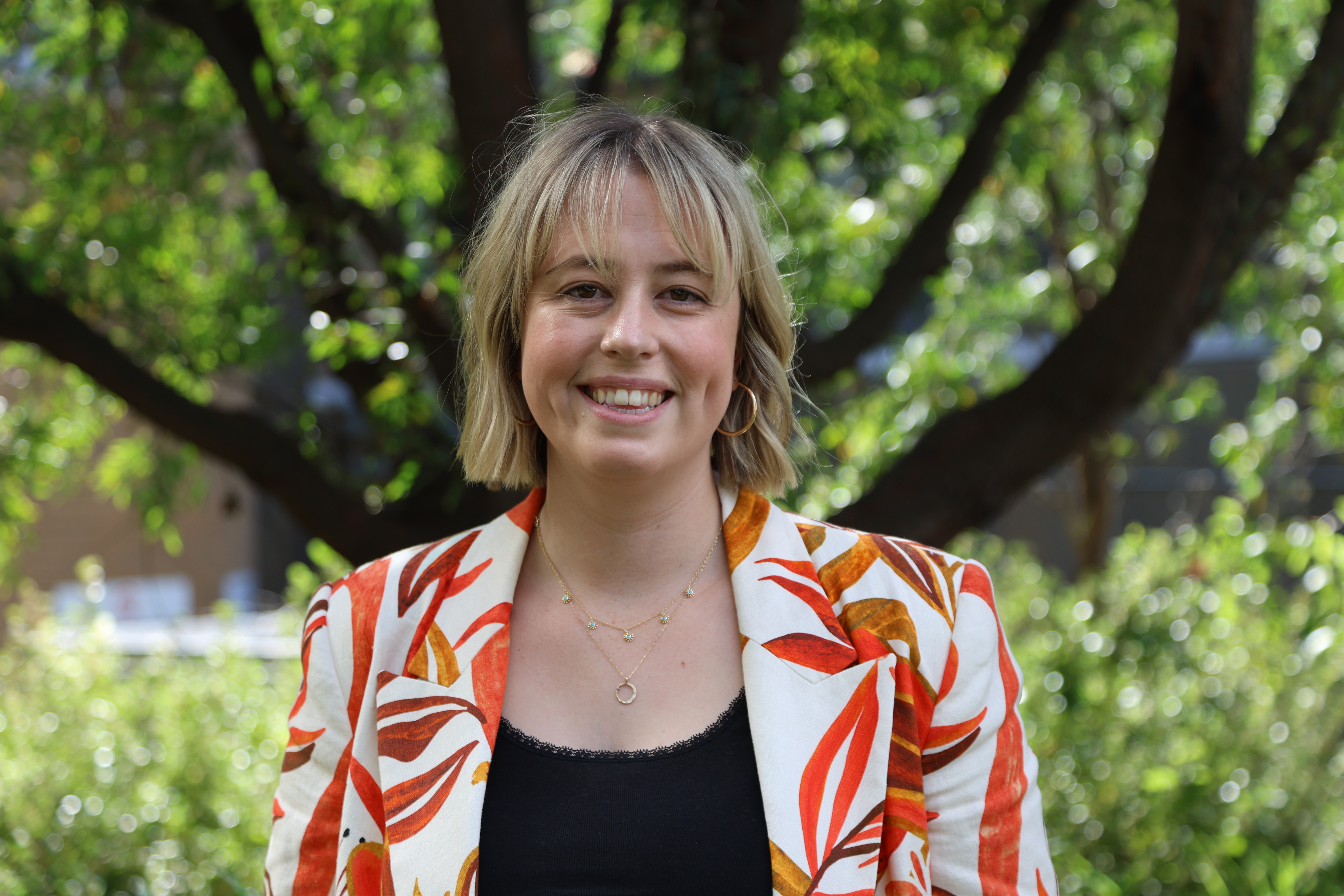
Harriet C. Fitzgerald, PhD (she/her/hers)
Research Fellow
Hudson Institute of Medical Research and Monash University
Clayton, Victoria, Australia
Harriet C. Fitzgerald1,2; Sally Mortlock3; Caitlin Filby1,2; Fiona Cousins1,2; Elizabeth Marquez-Garcia1; Brett McKinnon3; Luk Rombauts2,4; Jim Tsaltas2,4; Grant W. Montgomery3; Caroline Gargett1,2
1. The Ritchie Centre, Hudson Institute of Medical Research, Clayton, Victoria, Australia
2. Department of Obstetrics and Gynaecology, Monash University, Clayton, Victoria, Australia
3. Institute for Molecular Bioscience, The University of Queensland, Brisbane, Queensland, Australia
4. Gynaecological Endoscopy and Endometriosis Surgery Unit, Monash Health, Clayton, Victoria, Australia
Abstract Text:
Endometriosis, where endometrial tissue grows outside of the uterus affects 11.4% of women and yet its pathogenesis and impact on the endometrium remains largely unknown. Several adult stem cells exist in the human endometrium, N-cadherin+ (CDH2 gene) epithelial progenitors and SUSD2+ mesenchymal stem cells (MSC) which are shed during menstruation and refluxed into the peritoneal cavity. SSEA1+ basalis epithelial cells resurface the denuded endometrium to generate the luminal epithelium. Perturbations in the gene expression signature of these cells may promote their ability to form endometriotic lesions, while also leading to impaired regeneration and differentiation for endometrial receptivity. Our aim was to determine the molecular signature of human endometrial stem/progenitor cells at the single cell level and discover novel markers and signalling pathways of endometrial stem cell populations and their niches.
Full thickness endometrial tissue containing both the functionalis and basalis was collected from women undergoing hysterectomy (n=5). Endometrial tissue was digested to single cells and underwent 6-way FACSorting for endometrial stem/progenitor cell subpopulations and their differentiated progeny using specific surface markers (N-Cadherin+/SSEA1-; N-Cadherin+/SSEA1+; N-Cadherin-/SSEA1+; N-Cadherin-/SSEA1-) and MSC (SUSD2+; SUSD2-). For single cell RNA sequencing (scRNA seq) analysis, the 6 cell fractions were tagged, pooled, barcoded using 10X Genomics and paired-end libraries generated, and analysed using Cell Ranger and Seurat pipelines. Immunofluorescence was performed on full thickness endometrium to examine the localisation of TRH and co-localisation of SSEA-1, N-Cadherin and IHH, and BOC and SSEA-1.
scRNAseq identified four populations of endometrial stem/progenitor populations of epithelial and mesenchymal origin from a total of 16 cell populations. Epithelial progenitors transitioned into mature cell states including a novel population in the junctional zone between the glands and luminal epithelium. Epithelial progenitors had high expression of TRH and IHH. Thyroid signalling pathway featured prominently in epithelial progenitors. TRH and IHH localised to the basalis endometrial glandular epithelia. N-Cadherin, SSEA-1 and IHH co-localised in the basalis endometrial glands. Key interactions were identified between IHH in epithelial progenitors and its co-receptors BOC and CDON in the stroma. BOC and SSEA-1 co-localised in the glandular and luminal epithelia.
Characterising the molecular signature of endometrial stem/progenitor cells, their niche environment and differentiation pathways has strong implications for understanding the pathogenesis of endometriosis and developing new treatments to target the disease and its implications for endometrial receptivity defects.