
Regular Abstract Submission
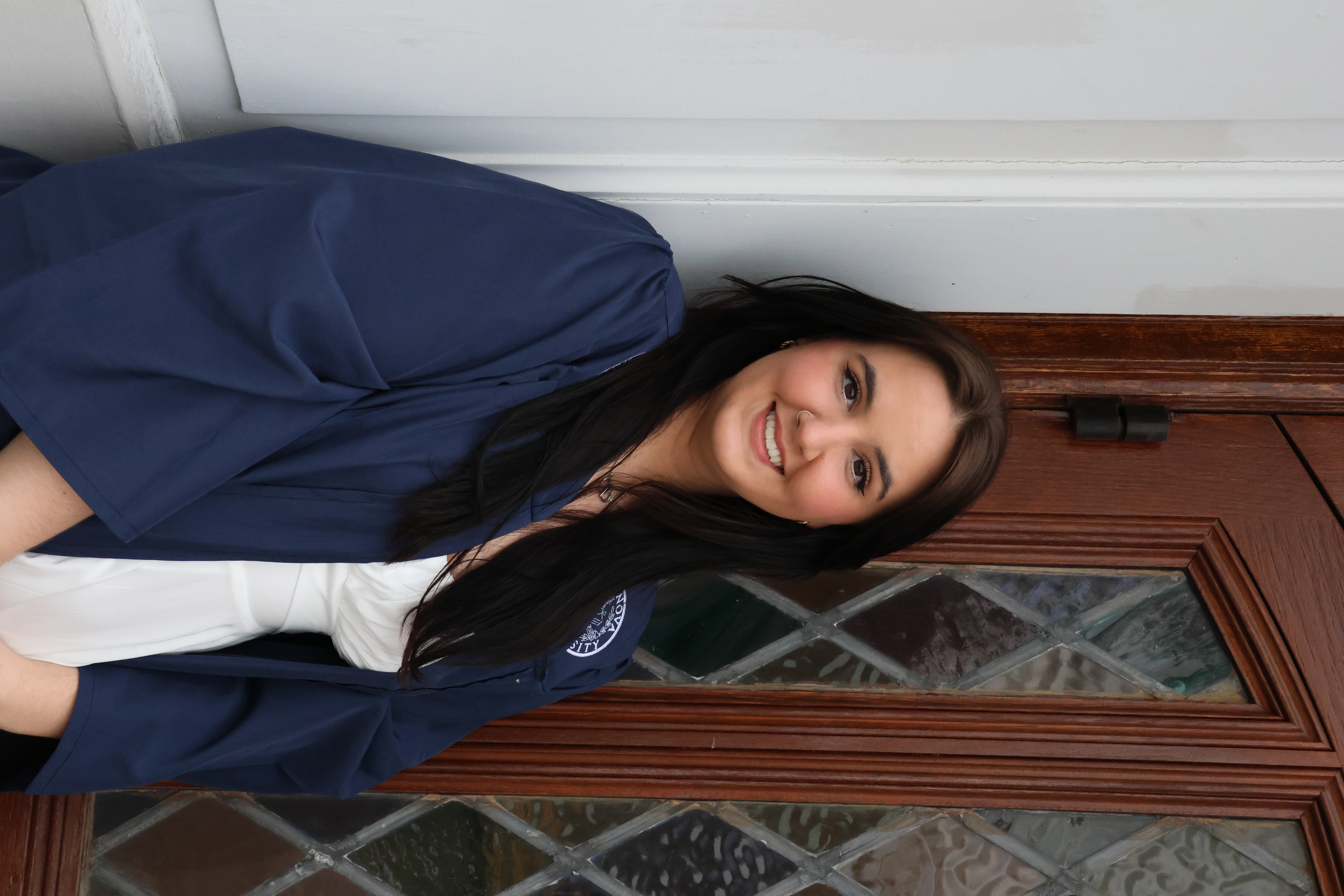
Anna Catherine Unser
Doctoral Candidate
Baylor College of Medicine
Houston, Texas, United States
Anna Catherine Unser1,2; Suni Tang1,2; Sydney Parks1,2; Genesis J. Herrera1,2; Ting Geng1,2; Zian Liao1,2; Peixin Jiang1; Linda Alpuing Radilla3; Xiaoming Guan3; Diana Monsivais1,2
1. Department of Pathology & Immunology, Baylor College of Medicine, Houston, Texas, USA
2. Center for Drug Discovery, Baylor College of Medicine, Houston, Texas, USA
3. Department of Obstetrics and Gynecology, Baylor College of Medicine, Houston, Texas, USA
Abstract Text:
Endometrial stem cells and their regenerative and proliferative properties are implicated in the pathogenesis of endometriosis. Endometrial aldehyde dehydrogenase 1A1+ (ALDH1A1+) cells have a dynamic expression pattern during postnatal endometrial development, but expression is restricted to the tips of glandular crypts at postnatal day 21. Given this expression pattern, their significant ALDH1A1 enrichment in the basalis human endometrium and high expression in endometriotic lesions, we hypothesized that ALDH1A1+ cells are endometrial progenitors that are critical for endometrial regeneration and in the pathogenesis of endometriosis. Lineage tracing using Aldh1a1cre/ERT2;ROSA26tdTomato reporter mice (n=5) showed that ALDH1A1+ cells locate to the endometrial glandular and luminal epithelium, indicating that they are long-term progenitors of the endometrium. Selective ablation of ALDH1A1+ cells with diphtheria toxin in Aldh1a1cre/ERT2; ROSA26-DTRflox/flox mice (n=5) decreased cellular proliferation and FOXA2 expression in the endometrial epithelium in vivo with substantial organoid death in vitro. When estrogen and progesterone were supplemented in ovariectomized mice (n=5), ALDH1A1 expression levels and localization were significantly affected as evaluated by qPCR and immunohistochemistry, indicating steroid hormones are regulators of ALDH1A1 within the uterus. Both mouse (n=7) and human (n=3) ALDHHI endometrial cells demonstrated higher organoid formation capacity, demonstrating stem and progenitor cell characteristics. Statistical analysis methods to detect differences in the above experiments were Student’s t-test or ANOVA (p < 0.05) when appropriate. Transcriptomic profiling of human endometrial organoids showed that ALDHHI organoids differentially expressed (padj < 0.05, log2FC > 1) fewer ciliated and keratin-expressing genes than ALDHLO cells suggesting stem-like profiles in ALDHHI cells. Further, ALDHHI cells from endometriotic lesions (n=2) demonstrated transcriptomic signatures related to inflammation, migration, adhesion, and cilia compared to ALDHHI cells from eutopic endometrium (n=3), indicating that these ALDHHI progenitor cells play a role in disease progression. Overall, using lineage tracing studies, organoid formation assays, and diphtheria toxin-mediated ablation in mouse models, we show that ALDH1A1+ cells are long-term endometrial progenitors. Our studies in mouse and human ALDHHI cells show increased organoid formation capacity and stem-like transcriptomic profiles. Lastly, ALDHHI cells from endometriotic lesion-derived organoids show increased signatures related to disease progression such as inflammation and adhesion, implicating their role in the pathogenesis of endometriosis. Studies supported by NICHD R01 HD105800 and the Burroughs Wellcome Fund.