
Regular Abstract Submission
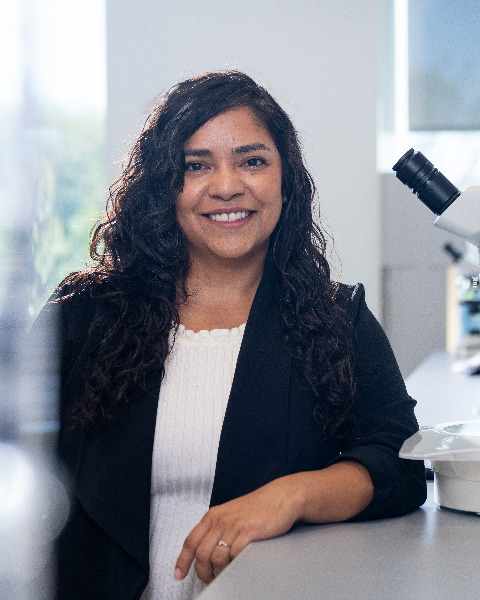
Daniela R. Chavez, PhD
Assistant Professor
Towson University
Baltimore, Maryland, United States
Daniela Chavez1,2, Pei-Chih Lee2, Ashley Gelin1, Pierre Comizzoli2
1. Department of Biological Science, Towson University, Towson, MD, USA
2. Smithsonian’s National Zoological Park and Conservation Biology Institute, Washington, D.C., USA
Abstract Text:
Long-term preservation of oocytes in human and animals is an essential tool in assisted reproduction. However, this remains challenging partly due to the high cost of current cryopreservation and storage methods that rely on liquid nitrogen. Microwave-assisted drying is an alternative method that would permit long term storage of cells at supra-zero temperatures without requiring liquid nitrogen. We previously reported the success of dry-preserving oocytes’ nuclei (germinal vesicles; GV) in the domestic cat model. The goal of this study was to explore the potential of this method in another model species. Specifically, we investigated the effect of microwave-assisted drying on DNA integrity. To examine the effect of microwave drying on GVs, oocytes were permeabilized with hemolysin before exposure to 1.5 M trehalose (a natural sugar known for its protective properties during dehydration of small organisms). Oocytes were then dehydrated by uniform microwave radiation for various times (0, 10, 20 or 30 minutes), immediately rehydrated for 30 minutes, and then fixed. DNA integrity was analyzed using a terminal deoxynucleotidyl transferase dUTP nick end labeling (TUNEL) assay. For each condition, including the fresh control, we used 14 to 35 oocytes in at least two experimental repeats. We found that permeabilization and trehalose exposure (0-min control) did not significantly increase DNA damage as compared to fresh controls (12.0% TUNEL positive; T+ and 26.9% T+; respectively; p >0.05). We also found no significant difference between 0-min controls and the 10-minute drying group (13.3% T+). However, DNA damage increased with 20 and 30 minutes of drying time (27.3% T+ and 19.0% T+ respectively; p < 0.05). Subsequently, we assessed the effect of drying for 10 or 30 minutes followed by storage for either 0, 1, 2, 4 or 8 weeks at 4°C in sealed moisture barrier bags. We found that storage for up to 8 weeks did not increase the incidence of DNA damage (for either drying time) any further than 0-week controls (p < 0.5) with one exception (4 weeks, 30 minutes p > 0.5). Taken together, these results are largely consistent with domestic cat studies. As an alternative to traditional cryopreservation, these results demonstrate the intact robustness of GVs to microwave drying in a new animal model. Future studies will focus on optimizing extensive storage periods and assessing post-preservation GV functionality during maturation, fertilization, and embryo development.