
Male Reproductive Tract
Session: Poster Session A
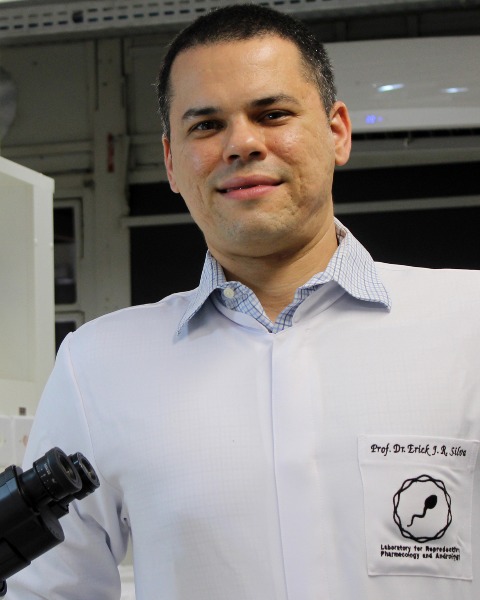
Erick J. R Silva, PhD
Associate Professor
São Paulo State University
Botucatu, Sao Paulo, Brazil
E.J.R. Silva1, Poliana V. Martini1, Alexandre D. Andrade1, Camila T. Ferreira1, Isabela A. Camargo1, Luiz M. F. Portela2, Helio Kushima1, Luis A. Justulin2, Célio J.C. Fernandes1.
1 Department of Biophysics & Pharmacology, Institute of Biosciences of Botucatu, São Paulo State University (UNESP), Botucatu-SP, Brazil.
2 Department of Structural & Functional Biology, Institute of Biosciences of Botucatu, São Paulo State University (UNESP), Botucatu-SP, Brazil.
Abstract Text:
Epididymitis, an inflammatory condition affecting the epididymis, poses a significant threat to male fertility and health. Bacterial infections are the most common etiological factor of epididymitis, which may lead to inflammatory cell infiltration, edema, epithelial and smooth muscle cell destruction, and interstitial fibrosis, typically observed in the cauda region. Interstitial fibrosis, characterized by excessive accumulation of fibrotic tissue built from elements of the extracellular matrix (ECM), underscores the potential for long-term sequelae of epididymitis. Matrix metalloproteinases (MMPs) are key regulators of fibrotic tissue remodeling, ECM degradation, and immune cell trafficking during inflammation. Nevertheless, their specific roles in epididymitis remain incompletely elucidated. Here, we examined the expression and activity of selected MMPs and their cognate tissue inhibitors in a lipopolysaccharide (LPS)-induced epididymitis model in mice. We induced epididymitis in C57BL/6 mice (animal ethics approval #9371270522 and #7246220324) by interstitial injection of sterile saline (control) or ultrapure LPS from E. coli 055:B55 (50 µg, Invivogen) into the interstitial space of the initial segment or cauda epididymidis under anesthesia (ketamine/xylazine 60/20 mg/kg, i.p.). Mice were euthanized at 6 h, 24 h, 72 h, and 7 days post-injection, and the initial segment and cauda epididymidis were dissected and processed for RT-qPCR to assess transcript levels of selected genes (Mmp2, Mmp7, Mmp9, Mmp13, Timp1, Timp2, Timp3, Timp4, and Reck) with Hprt1, Rps18 and Rplp0 as the endogenous control, and for gelatin zymography assays to assess MMP2 and MMP9 activity. Results were analyzed using Student’s t-test (p< 0.05 was considered statistically significant). LPS challenge induced a temporal and regionally specific modulation of MMPs expression and activity in the epididymis. LPS up-regulated Mmp13 transcript in the initial segment and cauda epididymis ( >141.9 and >17.2 fold-change, respectively) at 6 h compared to the control group, with sustained up-regulation in the initial segment ( >2.4) at 24 h. LPS up-regulated Mmp9 in the initial segment ( >3.7) and Mmp7 in the cauda epididymidis ( >4.6) at 24 h, whereas it down-regulated Mmp2 in the cauda epididymidis (< 2.5) at this time point. Elevated Mmp9 levels persisted in both epididymal regions at 72 h ( >4.5 and >18.5, respectively). Regarding MMP inhibitors, LPS up-regulated Timp1 in the initial segment at 6 h and 24 h ( >3.5 and >5.0, respectively) and in the cauda epididymidis ( >2.9, respectively) only at 24 h. It further up-regulated Reck ( >5.0) and down-regulated Timp2 (< 4.0) in the initial segment at 72 h. Zymography analysis showed that LPS inhibited the activity of MMP9 zymogens at 6 h and 24 h, followed by a late induction at 72 h and 7 days in both epididymal regions. These findings revealed that epididymal MMPs exhibit a complex and temporally regulated response during acute inflammation, with MMP13 acting as an early and MMP7 and MMP9 as later downstream mediators in response to LPS challenge. Our results provide novel insights into the involvement of MMPs in epididymal inflammation. Our ongoing investigations are focused on evaluating the therapeutic potential of MMP inhibition as an adjuvant therapy to reduce the detrimental outcomes of epididymitis on male fertility. Financial Support: FAPESP, CAPES, and CNPq.