
Endocrine Disruptors
Session: Poster Session A
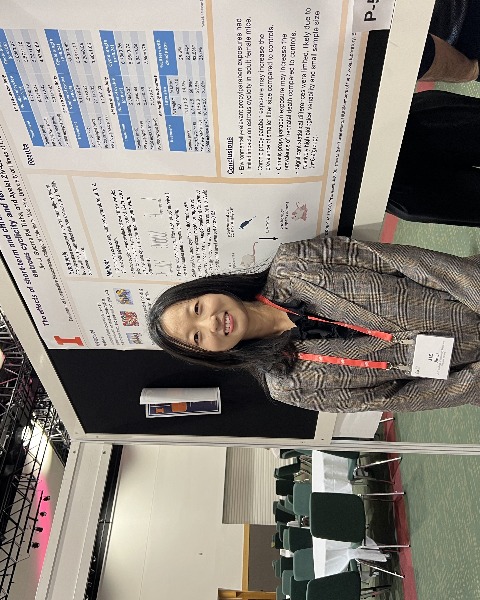
Jie Li, MS
Graduate Student
University of Illinois at Urbana-Champaign, Illinois, United States
Jie Li, Swarna Pal Tisha, and Ayelet Ziv-Gal
Department of Comparative Biosciences, University of Illinois at Urbana-Champaign, Urbana, Illinois
Abstract Text: The oviduct is the site for fertilization and pre-implantation embryo development. Within the oviduct, secretory and ciliated epithelial cells, which directly interact with gametes and embryos, are essential for these processes. Female steroid hormones, estrogen and progesterone, are well-documented to affect the morphology and function of these oviductal epithelial cells. However, the hormonal regulation also makes the oviduct susceptible to endocrine-disrupting chemicals, such as parabens. Parabens, a group of chemicals widely used as preservatives in cosmetics, pharmaceutics, and personal care products, have been shown to exhibit weak estrogenic, endocrine-disrupting properties. Our in vitro study has demonstrated that propylparaben, one of the most commonly used parabens, reduces cell density and inhibits cell-cycle progression of oviductal secretory epithelial cells. However, the effects of in vivo exposure to propylparaben on oviductal epithelial cells remain unknown. Here, we hypothesized that both acute and chronic propylparaben exposure would disrupt epithelial cells survival in a cell-specific manner, in the murine oviduct. In the acute exposure study, adult female CD-1 mice were orally administered propylparaben at doses of 0, 20, 200 µg/kg/day for ten days. In the chronic exposure study, mice received the same oral doses for six months, daily. Following treatment, oviducts were collected at diestrus for gene expression analysis of cell type-specific makers (Pax8, FoxJ, Ck18), apoptotic factors (Bax, Bcl2), and cell proliferation marker (Ki67) by RT-qPCR (n=5-6 per group). Histological sections of the oviducts (n=4 per group) were evaluated by immunohistochemistry for a ciliated cell marker (acetylated tubulin) and analyzed using ImageJ to determine ciliated epithelial cell abundance. Data were analyzed by one-way analysis of variance (ANOVA) followed by Dunnett’s 2-sided post-hoc comparisons. Statistical significance was determined by a p value of ≤ 0.05. Our data indicate that propylparaben selectively altered gene expression and acetylated tubulin levels, in both studies. Specifically, in the acute dosing study, a significant increase in the expression of Bax was observed in mice exposed to propylparaben at 20 µg/kg/day (mean ± SD; 2.2 ± 0.5) and 200 µg/kg/day (2.4 ± 0.8) compared to controls (1.2 ± 0.6). Additionally, the expression of Bcl2 was significantly increased in the 200 µg/kg/day treatment group (2.7 ± 0.6) compared to controls (1.2 ± 0.7). Further, the abundance of ciliated epithelial cells was significantly reduced by propylparaben exposure at 20 µg/kg/day (83.8% ± 2.2%) compared to controls (92.9% ± 2.2%). In the chronic dosing study, we found a trend towards increased expression levels of Bax following propylparaben exposure at 20 µg/kg/day (1.4 ± 0.3) compared to controls (1.0 ± 0.2). Last, propylparaben significantly reduced ciliated cell abundance at 20 µg/kg/day (81.4% ± 3.3%) and 200 µg/kg/day (84.5% ± 6.4%) compared to controls (94.1% ± 2.3%). Overall, acute and chronic propylparaben exposures alter levels of apoptotic factors and reduce the abundance of ciliated cells in murine oviducts which may potentially impact oviduct function. Supported by NIH/NIEHS R03 ES032887-01A1