
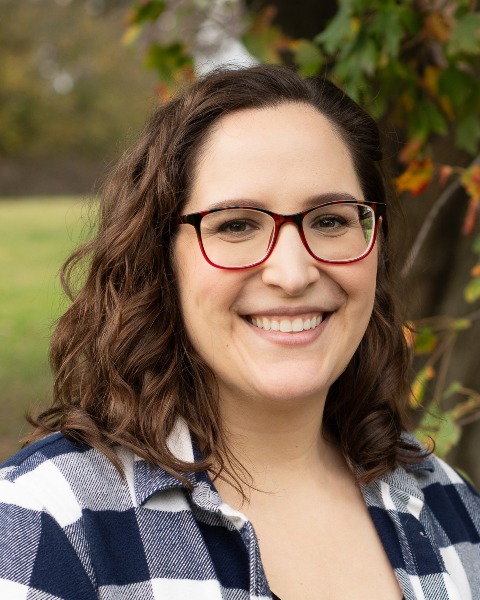
Tenure-track Investigator
National Institutes of Health, NICHD
Washington, District of Columbia, District of Columbia, United States
I am an investigator at the National Institute of Child Health and Human Development’s Intramural Research program, where I started my independent lab (the Unit on Chromosome Dynamics) in October 2023. The goal of my research program is to understand the fundamental principles regulating inter-chromosomal communication in the germline and soma. My previous research experience focused on dissecting the distinct and conserved molecular pathways used by different organisms to regulate genome dynamics throughout the cell cycle. My doctoral research under the guidance of Dr. Barbara Mellone employed evolutionary cell biology to study centromere structure and meiotic drive in the Drosophila model system. There, I uncovered that centromere proteins in Drosophila co-evolve to maintain centromere function as part of an evolutionary arms race with centromere DNA.
As a post-doctoral fellow, I transitioned from studying centromere evolution to investigating 3D interphase genome organization and meiotic chromosome dynamics. I expanded the applications of Oligopaint DNA Fluorescence in situ hybridization (FISH) technology to label entire chromosomes in insects and designed a custom computational pipeline for high-throughput automated 3D image analysis. I combined these two tools to study the role of the highly conserved Structural Maintenance of Chromosomes Complex on interphase genome structure in flies (1). Additionally, I performed the first ever study using single-cell translocation analysis by FISH in flies to prove a causal relationship between interphase chromosome folding and translocation potential after DNA damage (2).
In addition to my work on the interphase genome, I applied my dual Oligopaint/computational analysis pipeline to analyze meiotic homolog pairing (3) and sex chromosome dosage compensation. These studies resurrected a classical model system for studying chromosome dynamics - the silkworm, Bombyx mori. My work in the silkworm germline have identified several novel aspects of meiotic chromosome dynamics, including a role for transcription in homolog recognition and a mechanism where crossover location can dictate downstream kinetochore formation.
My lab employs these imaging-based tools in combination with genomics approaches to interrogate the molecular mechanisms regulating genome organization during meiosis (gamete formation) across species, most recently in the pantry moth (4). This research is directly in line with the mission of NICHD to understand the molecular, cellular, and structural basis of development.
1. Rosin LF, Nguyen SC, Joyce EF. Condensin II drives large-scale folding and spatial partitioning of interphase chromosomes in Drosophila nuclei. PLOS Genetics. 2018;14(7):e1007393.
2. Rosin LF, Crocker O, Isenhart RL, Nguyen SC, Xu Z, Joyce EF. Chromosome territory formation attenuates the translocation potential of cells. Dernburg AF, Struhl K, Bosco G, editors. ELife. 2019 Nov 4;8:e49553.
3. Rosin LF, Jr JG, Drinnenberg IA, Lei EP. Oligopaint DNA FISH reveals telomere-based meiotic pairing dynamics in the silkworm, Bombyx mori. PLOS Genetics. 2021 Jul 28;17(7):e1009700.
4. Hockens C, Lorenzi H, Wang TT, Lei EP, Rosin LF. Chromosome segregation during spermatogenesis occurs through a unique center-kinetic mechanism in holocentric moth species. PLOS Genetics. 2024 Jun 24;20(6):e1011329.
Disclosure information not submitted.
Chromosome-Specific Bias in Double Crossover Events During Meiosis in the Holocentric Pantry Moth
Wednesday, July 30, 2025
11:00 AM - 11:15 AM EDT