
Invited Speaker Abstract Submission
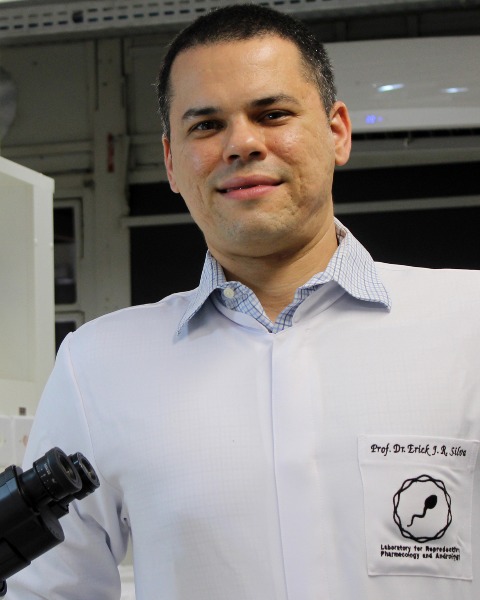
Erick J. R Silva, PhD
Associate Professor
São Paulo State University
Botucatu, Sao Paulo, Brazil
Erick J. R. Silva
Department of Biophysics and Pharmacology, Institute of Biosciences, São Paulo State University (UNESP), Botucatu-SP, Brazil.
Abstract Text:
Seminal plasma proteins play key roles in promoting the survival and functional integrity of spermatozoa during their journey in the female reproductive tract. Among them, semenogelin-1 (SEMG1), a member of the Rapidly-Evolving Seminal Vesicle Transcribed (REST) family, is the most abundant protein in the seminal plasma and a major structural component of the semen coagulum that traps spermatozoa immotile after ejaculation. In humans, SEMG1 binds EPPIN (Epididymal protease inhibitor) on the sperm surface, leading to a transient inhibition of sperm motility and capacitation on the semen coagulum, until the proteolytic degradation of SEMG1 by the serine protease PSA (prostate-specific antigen). Previous studies have shown that the effects of SEMG1 on sperm function can be mimicked by synthetic EPPIN ligands, making it a promising strategy for innovation in male contraceptive development. Recently, our group showed that mouse SEMG1 (also known as SVS2) and EPPIN are binding partners, suggesting that their reproductive functions are evolutionarily conserved between humans and mice. Our recent studies explored mouse spermatozoa in experimental and translational studies to dissect the functional domains of SEMG1 and the molecular mechanisms underlying the inhibition of sperm motility (both progressive and hyperactivated) and capacitation. We have employed functional, biochemical, molecular, and super-resolution microscopy techniques to uncover SEMG1’s involvement in the hallmark events of sperm hyperactivation and capacitation, such as cAMP/adenylyl cyclase/PKA and tyrosine phosphorylation signaling pathways, and ion channel (e.g., CatSper) currents, and the relevance of EPPIN binding to such events. We identified two distinct functional domains within mouse SEMG1: Q32-V118 and R98-G375. These domains independently inhibit sperm hyperactivation and capacitation by suppressing CatSper currents and PKA- and tyrosine kinase-mediated phosphorylation. Notably, only the R98-G375 sequence bound EPPIN, suggesting that SEMG1 modulates sperm function by multiple mechanisms. Altogether, our findings shed new light on the complex mechanisms underlying the influence of SEMG1 on sperm physiology. Moreover, the identified functional domains of SEMG1 represent promising templates for the design of novel ligands with spermiostatic activity, both dependent and independent of EPPIN binding, offering additional avenues for non-hormonal male contraceptive development targeting spermatozoa. Financial Support: FAPESP, CAPES and CNPq.