
Invited Speaker Abstract Submission
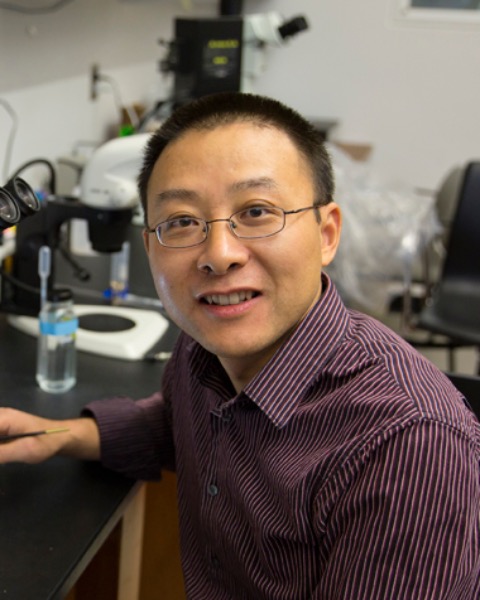
Jianjun Sun, PhD
Professor
University of Connecticut
Storrs, Connecticut, United States
Yuping Huang1, Jiyang Zhang3, Stella E. Cho1, Rene N. Rovozzo1, Kyle Hadden4, Teresa Woodruff5, Shuo Xiao3, and Jianjun Sun1,2
1 Department of Physiology and Neurobiology, University of Connecticut, Storrs, CT, USA
2Institute for Systems Genomics, University of Connecticut, Storrs, CT, USA
3Department of Pharmacology and Toxicology, Ernest Mario School of Pharmacy, Rutgers University, Piscataway, NJ, USA
4Department of Pharmaceutical Sciences, School of Pharmacy, University of Connecticut, Storrs, CT, USA
5Department of Obstetrics, Gynecology, and Reproductive Biology, Michigan State University, East Lansing, MI, USA
Abstract Text:
Nearly half of all pregnancies across the globe are unintended, which takes a serious toll on women, families, and our societies. Effective contraception is key to reduce these burdens, however, 17% and 24% of women do not have their contraceptive needs met and are unsatisfied with current contraceptive methods, respectively. An effective nonhormonal contraceptive with less side effects will be a great alternative. However, the development of nonhormonal contraceptives for women is stalled due to the lack of effective screening platforms. My lab utilizes Drosophila (fruit flies) for the study of ovulation, a process of releasing fertilizable oocyte and critical for female reproduction. Our work suggest that Drosophila ovulation involves a follicle rupture process and requires matrix metalloproteinase (MMP) activity, reminiscent to mammalian ovulation. In addition, multiple conserved factors and signaling pathways are involved in both Drosophila and mammalian ovulation. Therefore, Drosophila ovulation can be a valuable model for screening ovulation-inhibiting compounds that have the great potential for nonhormonal contraceptive development. Utilizing our novel ex vivo follicle rupture assay and luminescent based superoxide detection assay, we provided the proof-of-concept study, established a high-throughput screening platform, and carried out a large-scale phenotypic screening. We screened more than 20K compounds from five different libraries and identified ~50 compounds that are efficient to inhibit Drosophila follicle rupture. Through collaboration with Drs. Teresa Woodruff and Shuo Xiao’s groups, we have also validated some of these compounds in an ex vivo ovulation assay using mouse follicles. We are currently validating those promising compounds using in vivo mouse superovulation assay and identifying the molecular targets using Drosophila ovulation model. Overall, we have established a novel and efficient high-throughput platform to screen compounds that can inhibit follicle rupture in Drosophila and have great potential for developing nonhormonal contraceptives for women.