
Spermatogonial Stem Cells
Session: Poster Session A
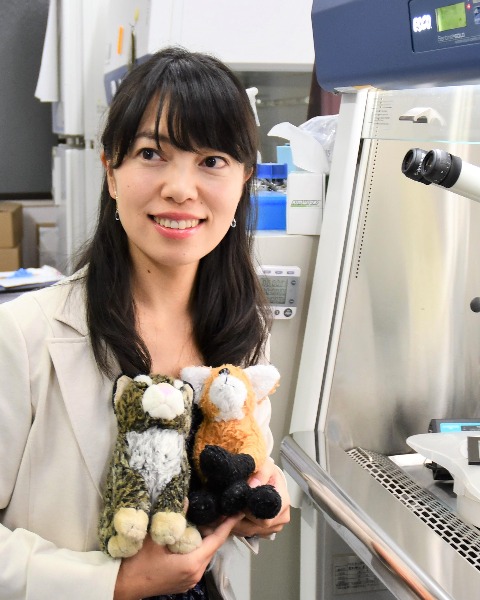
Mayako Fujihara, Ph.D
Program-specific Associate Professor
Wildlife Research Center
Kyoto, Japan
Uncovering the Distinct Roles of NELF-B and TDP-43 in Male Meiosis through scRNA-seq Analysis
Kavyashree Basavaraju1, Emily G. Kaye2, Karen Adelman2, and Prabhakara P. Reddi1
1. Department of Comparative Biosciences, University of Illinois Urbana-Champaign, Urbana, IL, 61802, USA
2. Department of Biological Chemistry and Molecular Pharmacology, Harvard Medical School, Boston, MA, 02115, USA
Abstract Text:
Male germ cell development starts with spermatogonia (SG) undergoing mitosis followed by meiotic division of spermatocytes (SC). The resulting haploid round spermatids (RS) then differentiate into mature spermatozoa. Germ cells transition through developmental stages in the seminiferous epithelium, requiring precise spatiotemporal gene regulation. Our work using conditional knockout (cKO) mouse models showed the critical roles of TAR DNA binding protein of 43 kDa (TDP-43), which regulates transcription, RNA processing, and negative elongation factor complex member B (NELF-B), which induces Pol II pausing. NELF-B knockout model highlighted the importance of RNA Pol II pausing spermatogenesis. Meiotic processes impacted by TDP-43 and NELF-B, however, remain poorly understood and are essential to study because male infertility affects at least 30 million men globally.
Our previous study found that TDP-43 loss leads to meiotic arrest at late pachytene stage while NELF-B loss disrupts meiosis at a slightly later stage, suggesting similar defects caused by these regulators. We compared TDP-43 and NELF-B cKO models to elucidate their distinct and overlapping roles in gene regulation during spermatogenesis.
We generated cKO mice that lacked NELF-B or TDP-43 in male germ cells by crossing the Stra8-iCre with floxed NELF-B or TDP-43 C57BL/6J mice. We investigated the transcriptional changes in male germ cells lacking NELF-B or TDP-43 using 10X single-cell RNA-seq (scRNA-seq) on whole testis samples from PND24 mice, where all germ cell types (SG, SC, RS) are present, and defects were observed histologically in both cKO animals. scRNA-seq reads were mapped using 10x Genomics Cell Ranger 7.0.0 to mouse reference genome (mm10) and processed with Seurat v4.2.0 to identify the cell clusters. Cell types were identified using previously defined marker genes. Cell counts were normalized by the number of mice per genotype to compare across the genotypes. Further, the differentially expressed genes (DEGs) in SG and early meiotic cells across the conditions were identified via pseudobulk analysis using DESeq2 v1.36.0 with a cutoff of log2foldchange ≥ 1 and padj. < 0.01, and functional enrichment analysis of the DEGs was determined by clusterProfiler v4.4.4.
We identified 23 clusters representing 24,269 cells, consolidated into ten cell types, with control (n = 11,170), NELF-B cKO (n = 6,404), and TDP-43 cKO (n = 6,695) byscRNA-seq analysis. Loss of NELF-B or TDP-43 significantly reduced SC and RS germ cells, while SG and somatic cells remained unaffected. NELF-B loss gradually impacted prophase I, whereas TDP-43 loss severely affected the pachytene stage, aligning with its high expression and role in synapsis and homologous recombination. Differential expression analysis revealed 207 DEGs in NELF-B cKO (evenly up and downregulated) and 842 DEGs in TDP-43 cKO (mostly downregulated). Downregulated genes were enriched with spermatid development and motility, indicating that NELF-B or TDP-43 loss impairs gene expression essential for spermatogenesis. Upregulated genes were not significantly enriched with any pathways.
Overall, loss of NELF-B disrupts SC to RS differentiation, with TDP-43 loss showing a more acute role in pachytene SC. Interestingly, despite similar histological defects and meiotic failure in TDP-43 and NELF-B cKO mice, more genes are affected by the loss of TDP-43, likely due to its multiple roles in transcription regulation, RNA processing and stability, suggesting that TDP-43 plays a more critical role in spermatogenesis than NELF-B. Our findings highlight the distinct roles of NELF-B and TDP-43 in spermatogenesis, offering insights into male infertility and potential therapeutic targets.