
Connecting with Mom -Trophoblast and Placenta
Session: Poster Session B
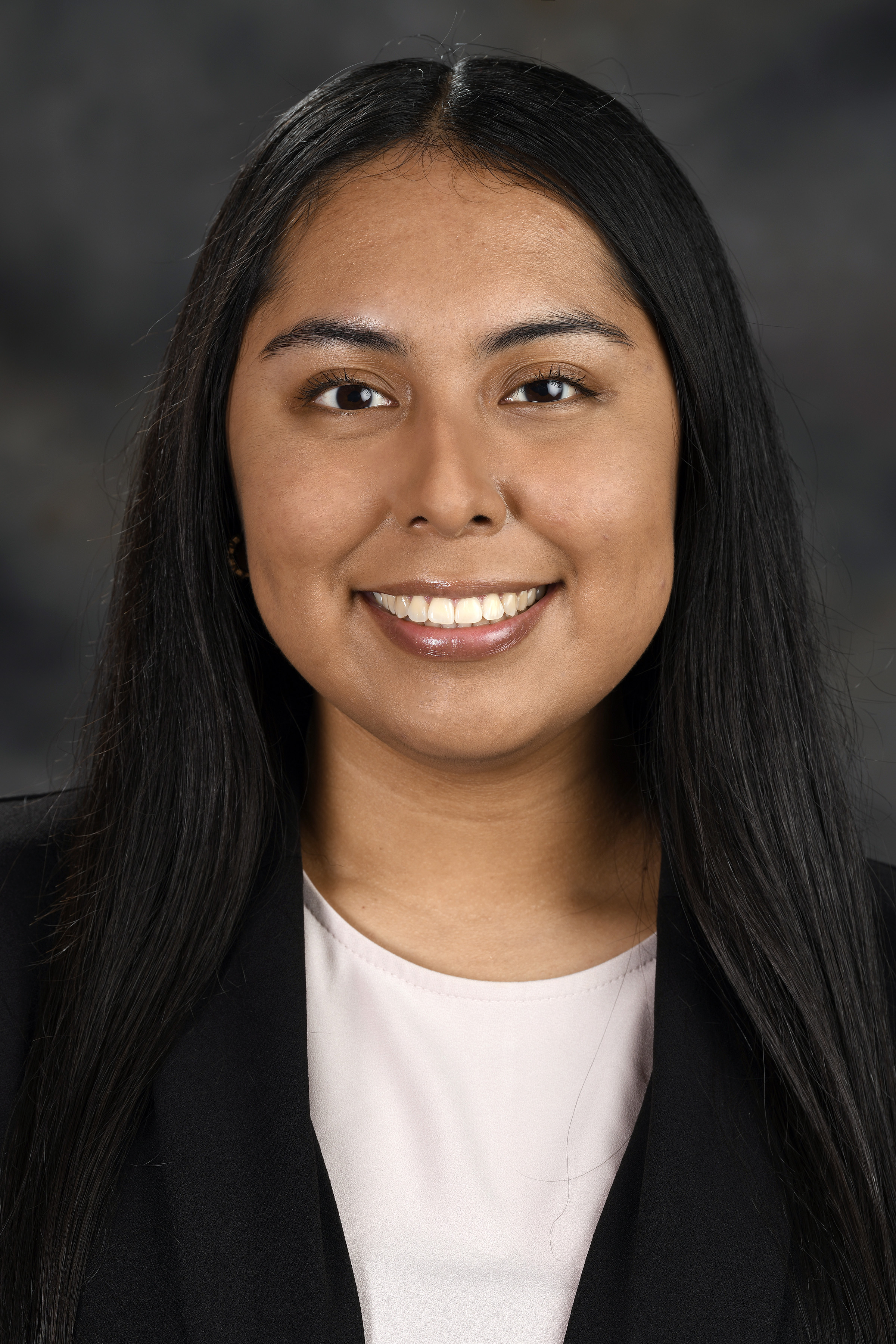
Maira L. Perez, B.S.
Post-baccalaureate Research Fellow
NIEHS/NIH
Durham, North Carolina, United States
Maira L. Perez1, Elizabeth Padilla-Banks1, Erixberto Olivencia Alvarez1, Veronica Farmer2, Donald Pizzo3, Megan Mulholland3, Mana Parast3, Amy Gladfelter2, Carlos M. Guardia1
1. Placental Cell Biology Group, Reproductive and Developmental Biology Laboratory, National Institute of Environmental Health Sciences, Durham, USA
2. Cell Biology Department, Duke University, Durham, USA
3. Department of Pathology, University of California San Diego, San Diego, USA
Abstract Text:
The placenta is the first organ to develop during pregnancy and functional impairments can lead to pregnancy disorders. The placenta is the center of oxygen, nutrient, and hormone exchange between mother and fetus, making it essential for proper fetal development. Autophagy is a cellular pathway that clears protein aggregates and damaged organelles in response to stressors and cytosol reprogramming during cell differentiation. For this, the cell uses several autophagy related (ATG) genes to generate a unique organelle, the autophagosome, that fuses with lysosomes to degrade and recycle its components. Vesicles transporting ATG9A, the only transmembrane ATG protein, act as membrane seeds for the autophagosome formation. Interestingly, the placenta is the only organ expressing ATG9B, a paralog to the ubiquitous ATG9A protein. We hypothesize that ATG9B is required for placenta-specific autophagy functions, including proper cell differentiation and function. To explore this hypothesis, we used full-term human placentas to isolate primary cytotrophoblast (CTB) cells. CTBs were cultured for 3 days and collected every 24 hours to assess ATG9A and ATG9B expression by RT-qPCR analysis. We also obtained 1st- and 3rd-trimester sectioned placentas to locate ATG9A and ATG9B transcript by in situ hybridization. Additionally, we generated single and double ATG9A/B KD cell lines in BeWo cells, treated them with forskolin for 48 hours to push syncytialization, and assessed expression of ATG9A, ATG9B and CGB. Lastly, we generated an Atg9b KO mouse model where we compared placenta morphology and histology of KO mice and control dams in combination with liter size and survival rate.
Preliminary results from purified primary CTBs revealed that as cells fuse to form the multinucleated syncytiotrophoblast (STB) layer, ATG9B is upregulated suggesting a role in proper placental development. In situ hybridization on 1st- and 3rd trimester placentas demonstrated more expression of ATG9B transcript in 1st trimester tissue located in the STB compared to 3rd-trimester, and ubiquitous expression of ATG9A in both suggesting importance of ATG9B expression in early CTBs before fusion. The single and double ATG9A/B KD RT-qPCR of BeWo cells showed that ATG9A and ATG9B do not compensate the KD of each other, however, the double KD does affect CGB levels of expression after fusion. In the Atg9b knockout (KO) mouse model, the adult mice were healthy yet sub-fertile, suggesting a pregnancy-specific phenotype.
Following the momentum of our preliminary data, we plan to perform bulk RNAseq in the ATG9A/B KD BeWo cells to identify possible pathways that are regulated by each ATG9 gene. We will also utilize other placental cells lines (JEG3, Okae/TSC) to validate phenotypes and generate single and double ATG9A/B KOs. Finally, we plan to generate a double Atg9a/b KO mouse model to possibly obtain more defined differences and rule out compensation in the placenta. Understanding the mechanisms of how autophagy impairment affects cargo degradation in the placenta will allow us to better understand the pathogenesis of pregnancy disorders associated with faulty development and pave a pathway towards clinical interventions.